
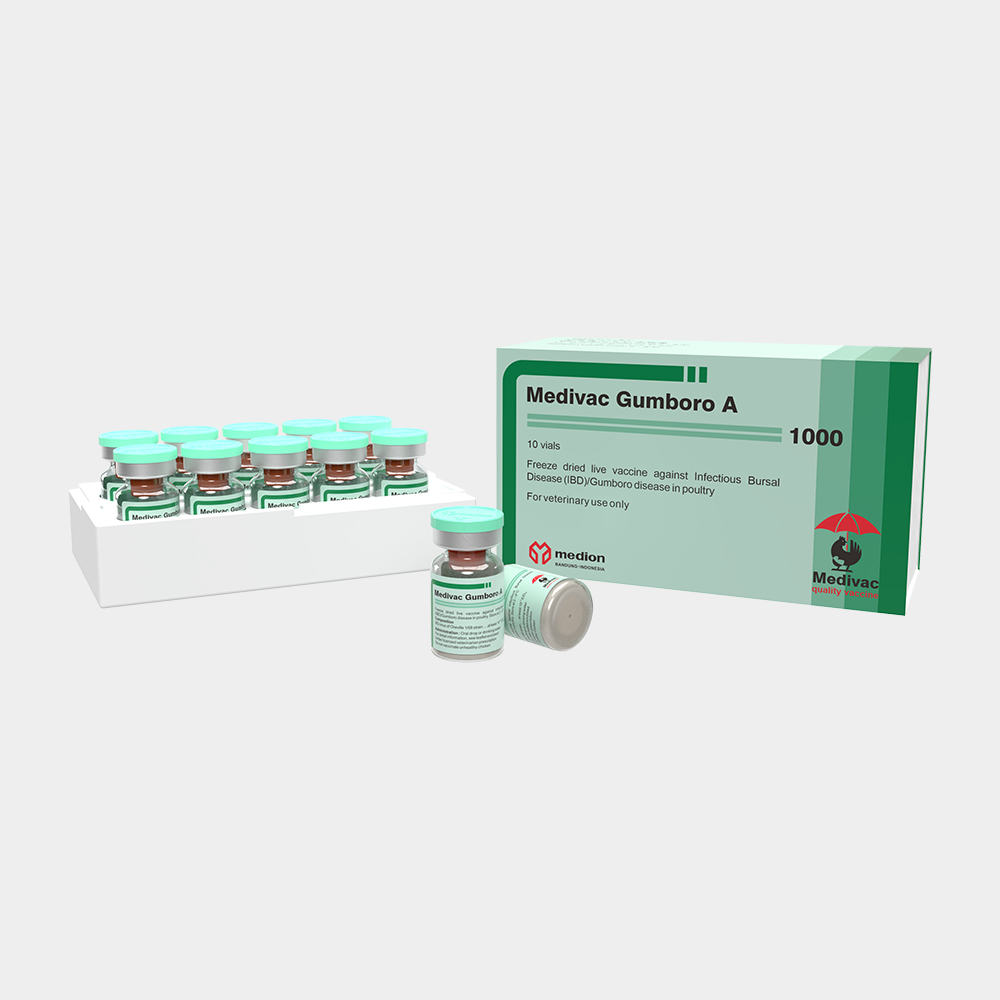
Medivac Gumboro A
Intermediate-plus Cheville 1/68 protection for high-risk Gumboro areas
Technical details
Description & composition
- Freeze-dried live attenuated vaccine.
- Live intermediate-plus IBD Cheville 1/68 strain: ≥ 102 EID50 per dose.
Indication
Immunization of broilers, layer pullets, breeder pullets and young native breeds against Infectious Bursal Disease, especially in high-risk or endemic areas.
Dosage & administration
- Administer one dose per bird by eye drop or drinking water.
- Vaccination timing depends on flock type and maternal-antibody level and is usually between 7-35 days of age.
Main benefits
- Low post-vaccination reaction.
- Fast bursal colonization after vaccination.
- Fast regeneration of bursal tissue.
- Provides high protection against different IBD strains.
- Suitable for high-risk or endemic areas.
Storage
Store at 2-8°C in the dark.
Precautions
- Vaccinate healthy birds only.
- Use each vial immediately after opening.
- Use the reconstituted vaccine within two hours.
- Add 2 g of skimmed milk powder per liter of drinking water before dissolving the vaccine.
Using product information in practical poultry-health programs
This page brings together the technical information available from the manufacturer or official source so composition, intended use, dosage, pack size, storage and precautions can be reviewed in one place. It is designed to help farm teams, hatchery professionals and technical staff find reliable product information quickly, while the approved label and local veterinary guidance remain the primary references for use.
Before adding any product to a poultry program, review the purpose of use, production stage, application method and its place within the existing vaccination or biosecurity plan. If you need to compare product categories or identify the most relevant option for a specific operational need, HyperCare provides technical and commercial support for poultry-health products available in Egypt, with decisions anchored to each product’s official technical data.
- Check the approved label or official technical source before use.
- Follow the recommended storage and application conditions.
- Use this page for technical comparison, not as a substitute for veterinary diagnosis.
Explore more products
Medivac ND Clone 45
Fast, homogeneous live Clone 45 protection against Newcastle disease
Medivac ND-IB
Combined live Clone 45 and H120 protection against ND and IB
Medivac ND La Sota
Rapid live La Sota protection against Newcastle disease
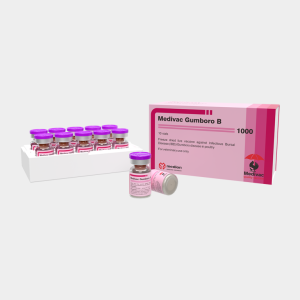
Medivac Gumboro B
Live intermediate D22 protection against Gumboro